Showing posts with label influenza pandemic. Show all posts

Monday, April 28, 2014

The A to Z Challenge: X is for X-Ray


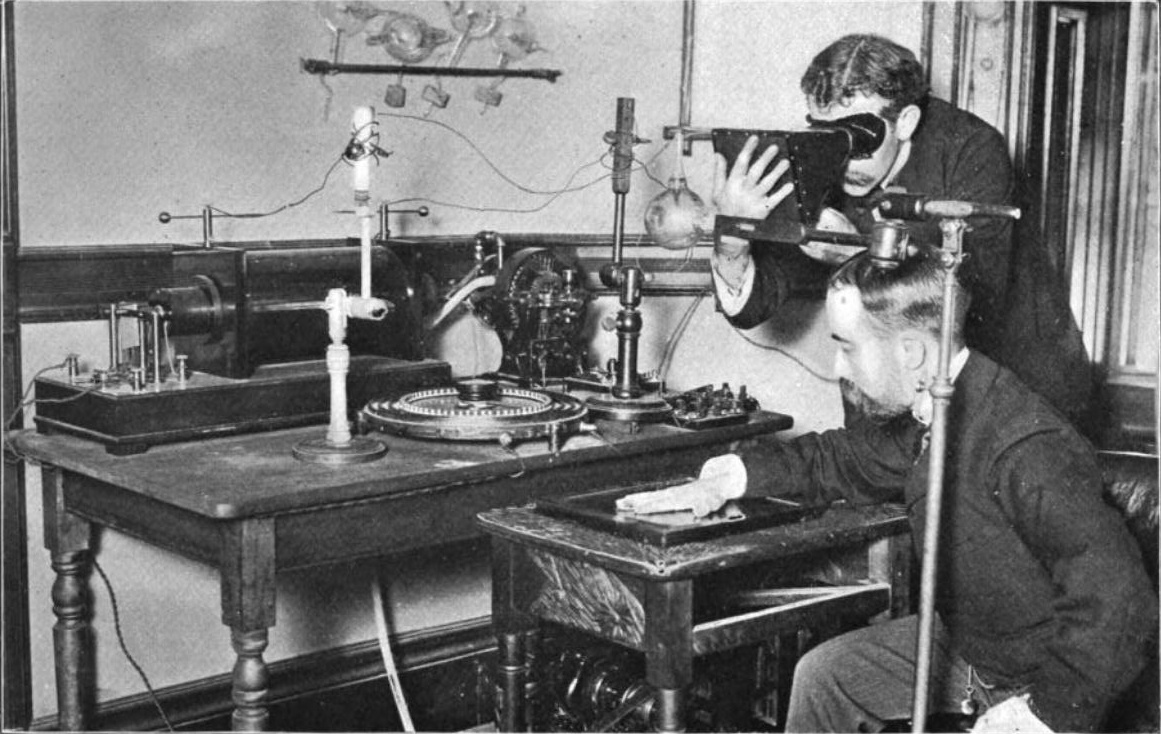
Experimenters taking an X-ray with an early Crookes tube apparatus, 1896. (Note the lack of any precaution against exposure to the radiation.)

The first medical X-rays were made in 1896, but it was well into the 20th century before diagnostic tools like this were available to most New Zealand doctors.

As well as identifying broken bones, X-rays are useful for diagnosing conditions including pneumonia and that all too common disease of the 19th and early 20th century, tuberculosis (or consumption, as it was commonly known).

But even if they had been able to diagnose such conditions more easily, there was often very little doctors could do to treat them. During the influenza pandemic of 1918, when doctors were desperately trying to save patients whose disease had progressed to pneumonia, they tried a vast range of remedies including morphine, quinine, mustard plasters, turpentine inhalations, alcohol, and even heroin, but they found that one of the most effective treatments for fever was a medicine that was then fairly new to New Zealand, and was seen as something of a wonder drug: aspirin.

Chemist shop interior, c. 1910, Christchurch. Webb, Steffano, 1880?-1967 : Collection of negatives. Ref: 1/1-004254-G. Alexander Turnbull Library, Wellington, New Zealand. http://natlib.govt.nz/records/22683638

Friday, April 4, 2014

The A to Z Challenge: D is for Daisy


And also for Doctor.

Daisy is an only child; an oddity at a time when large families were the norm. She's a bright and imaginative girl, taking after her grandmother Amy in many ways, and cherished by her extended family.

Daisy's War looks at the experience of family members left to manage the farms during World War I, with so many of the men away. In the next book (still a work-in-progress), the family faces the challenge of the 1918 Influenza Pandemic, which in a two month period killed almost half as many New Zealanders as the four years of the war had done.

Daisy has dreams even larger than her grandmother's: she wants to be a doctor. In early 20th century New Zealand this is a large ambition, but Daisy is determined.

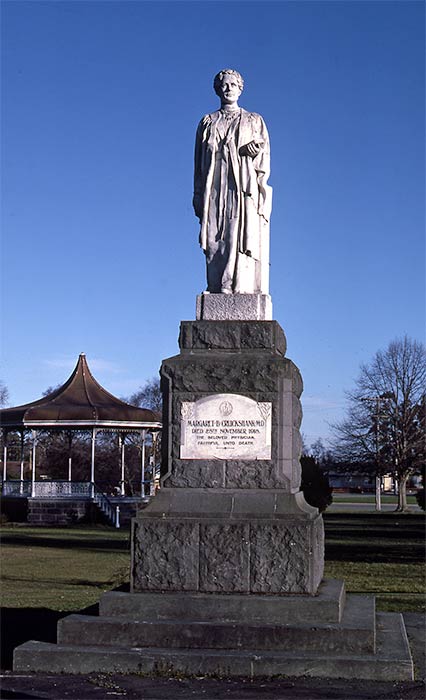
She's inspired by tales of woman doctors, including that of Margaret Cruickshank, who was New Zealand's first registered woman doctor.

Dr Cruickshank worked in the town of Waimate, in practice with a Dr Barclay. When the epidemic struck Waimate, Dr Barclay was still away on active service, and Margaret was managing the practice on her own. Her driver fell ill, but she continued to travel the district, by horse and gig or by bicycle, doing what she could for the sick. She even milked cows for some of her patients, in households where there was no one else to help.

By the time she caught influenza herself, her strength had been badly depleted. She died on 28 November 1918. The town of Waimate had a marble statue put up in her honour, inscribed with:


The Beloved Physician
Faithful unto Death

Jock Phillips. 'Memorials and monuments - Civilian memorials, 1900–1945', Te Ara - the Encyclopedia of New Zealand

Wednesday, November 11, 2009

This week in New Zealand history: Armistice Day

On the 12th of November 1918 (it was still the 11th in Europe), the official announcement of Armistice was published in New Zealand. After four years of hostilities, the Great War was over. In towns up and down the country, parades with brass bands and decorated floats, returned soldiers and schoolchildren, marched carrying banners and flags.

18,000 New Zealanders had died in the war, out of a population a little over one million; the highest death rate of any country in the British Empire, and one of the highest of any participating nation. Many of those people lining the streets to watch the parades would have been in mourning.

There were no parades in Auckland. The city's Chief Health Officer did not allow any official celebrations for Armistice Day - because crowds were something to fear. The war might be over, but deaths were not. Influenza was ravaging the country.